In the previous slimming step, I advised on cutting down calories right?
Then the next step is to BURN the calories.
When you burn more calories than you consume, you lose weight!
Do you know that 3,500 calories is equivalent to about 0.5 kg of fat?
If you want to lose about 0.5kg, then you need to burn 3,500 calories more than you eat.
So if you cut 500 calories from your diet each day, you'd lose about 0.5 kg a week (500 calories x 7 days = 3,500 calories).
Exercise along with cutting calories helps boost your weight loss. Exercise is also important for maintaining your weight.
A general guide is to include at least 30 minutes of physical activity in your daily routine. If you want to lose weight and maintain weight loss, you may need to increase your activity.
Sooo.. What kind of exercise should you do?
Let me recommend some easy ones to incorporate into your daily routine.
These are aerobic exercises that will help you burn fat calories.
1. Skipping
Get a skipping rope. Skip for about 100 times. Rest for 5 mins. Skip for another 100 times. Rest for 5 mins. Repeat this until 30 mins have passed.
Once you reach a stage when you no longer pant after skipping 100 times.
Go for 150 times before your rest for 5 mins.
This lets you gradually increase your exercise intensity without overstraining yourself.
2. Brisk walking
This is recommended for people who are having knee problems as vigorous exercise like jogging and skipping will put more stress on the knees.
Walk at a speed that you actually pant a bit. Walk for 30 mins.
Make sure you don't walk until you become breathless. (that would be like a slow jog already)
Once the same speed doesn't make you pant anymore (meaning you can talk/ sing freely without running out of breath), you can increase your walking speed.
For those without knee pain, can slowly increase into a slow jog speed.
3. Stepping
Stepping is a great way to get your heart beating and to burn calories. You can use your stairs at home. Take the stairs instead of the lift when you go home (if you stay in HDB flats).
Begin with 3 storeys first. Then slowly increase to 4, then to 5 storeys.
Take the stairs when you are the MRT station instead of using the escalator.
I took 2 full flights of stairs in Paya Lebar station and I panted so much. Super unfit. Have to do it more.
Even though you may not feel like the stepping is helping, it is! This exercise will not only help you lose weight but will also help shape up your buttocks and legs.
Once you do these exercise diligently, and control your caloric intake. You should be able to lose weight steadily, no matter how little.
Thursday, September 23, 2010

Wednesday, September 22, 2010
~Slimming Step 2: Changing your diet~
I always see girls/ women/ models who want to stay slim and their method was to eat only fruits or skip meals and exercise like mad.
This is not the healthy way of slimming down or staying slim.
In order to slim down successfully, your diet should be balanced and also equally distributed throughout the day.
What I recommend you to do is to eat small frequent meals instead of 2 or 3 big meals.
If you are thinking that you cannot control your appetite (you just keep craving for food) and that it is impossible to keep to small meals, I have a suggestion.
Eat food with low energy density.
What does this mean?
This means eating food that are more filling and yet do not give you so much calories.

http://allrecipes.com/HowTo/Calorie-Cutting-Tactics/Detail.aspx
It includes some tips that are not inside this entry.
Next step is Exercise!
Stay tuned...
This is not the healthy way of slimming down or staying slim.
In order to slim down successfully, your diet should be balanced and also equally distributed throughout the day.
What I recommend you to do is to eat small frequent meals instead of 2 or 3 big meals.
If you are thinking that you cannot control your appetite (you just keep craving for food) and that it is impossible to keep to small meals, I have a suggestion.
Eat food with low energy density.
What does this mean?
This means eating food that are more filling and yet do not give you so much calories.
Foods, such as desserts and candies, are high in energy density. This means that a small volume of them has a large amount of calories. You should avoid eating these more than twice a week.
Foods like vegetables and fruits, have low energy density. These foods provide a larger portion size with less calories.
What makes food less calorie packed and more filling?
- Water. Many fruits and vegetables are high in water, which provides volume but not calories. Grapefruit, for example, is about 90% water and has just 38 calories in a half-fruit serving. Carrots are about 88% water and have only 52 calories in 1 serving.
- Fiber. High-fiber foods, like vegetables, fruits and whole grains do not only provide volume, but also take longer to digest, making you feel full longer.
- Fat. Most fruits and vegetables do not contain a lot of fat. Fat raises energy density. One teaspoon of butter contains almost the same number of calories as 2 cups of raw broccoli. This implies that you may eat a lot of vegetables in a salad but if you add a lot of mayonnaise dressing (not low-fat one), you are still getting a lot of calories. So mind the dressing!
~~~~~~~~~~~~~~~~~~~~~~~~~~~~~~~~~~

Your best food choices
Changing lifestyle habits is not easy but not impossible.
The first step is knowing which foods to choose.
- Vegetables. Most vegetables are low in calories but high in volume. E.g. salad greens, asparagus, green beans, broccoli and zucchini.
- Fruits. All types of fruit fit into a healthy diet. But whole fresh or frozen fruits are better choices than fruit juices and dried fruits, which are concentrated sources of natural sugar, which means having a higher calorie content. And try to eat with the skin (edible), e.g. apple, grapes.
- Carbohydrates. Most carbohydrates are either grains or made from grains, such as cereal, rice, bread and pasta. The best type is whole grains because they're higher in fiber and other important nutrients (like vitamins B). Examples include whole-wheat bread, whole-wheat pasta, oatmeal, brown rice and whole-grain cereal. These may taste horrible (to me) but I am slowly getting used to the taste. Start with mixing brown rice and white rice.
- Protein and dairy. These include food from both plant and animal sources. The best choices are foods that are high in protein but low in fat and calories, such as legumes (beans, peas and lentils, which are also good sources of fiber), fish, skinless white-meat poultry, fat-free dairy products and egg whites.
Most important Question: How to make it work for you?
I am not asking you to start eating grass. You just have to replace some of your high caloric food with healthier choices like fruits and vegetables.
Here are ideas to make this eating plan work for you:
- Take more fruits and vegetables in your meals. E.g. Reduce your carbohydrate intake by halving your bowl of rice and replacing that half with vegetables. Or ask for more vegetables in your fishball noodle soup and do not finish all the noodles. Decrease the meat portion on your plate and increase the serving size of vegetables.
- Experiment with new food combinations. E.g. Toss some mandarin orange and peach slices into a salad. You may find some new tastes you love that fit within your eating plan. Check this website for low-calorie recipes.
- Start with soup or salad. Begin lunch with a vegetable-filled soup or a large salad with a small amount of low-fat or fat-free dressing. These foods take longer to eat and curb your hunger. Next, serve whole grains, an extra portion or two of vegetables, and a small serving of lean protein for your main course.
- Snack with fruits instead of titbits whenever you feel hungry in between meals.
By eating larger portions of foods less packed with calories, you stop your hunger pangs, take in fewer calories and feel better about your meal, which contributes to how satisfied you feel overall.
Check out this webpage.http://allrecipes.com/HowTo/Calorie-Cutting-Tactics/Detail.aspx
It includes some tips that are not inside this entry.
Next step is Exercise!
Stay tuned...
~Sunblocks: Additional info~
In the last sunblock post, I only talked about SPF which tells us how much the sunblock can protect us from the damage of UVB rays.
After a talk with a colleague today, I realized that I left out the protection factor for UVA rays.
So is there a protection factor for UVA rays that is used by the manufacturers?
PA stands for Protection Grade of UVA. There is currently no uniform measure of UVA absorption, so PA is only a rough indicator of the amount of UVA protection the suncreen offers.
There are three grades, namely PA+, PA++ and PA+++.
PA+++ offers the most protection. PA+ is adequate for most activities. If you're staying out in the sun for long hours, go for PA++ or higher.
~~~~~~~~~~~~~~~~~~~~~~~~~~~~~~~~~~~~
There are actually 4 methods being used to measure the protection effect.
1. PPF-method (Phototoxic Protection Factor)
2. APF-method (Erythemal UVA-protection Factor)
3. IPD-method (Immediate Pigment Darkening)
4. PPD-method (Persistent Pigment Darkening) or PFA (Protection Factor UVA)
APF and PPD methods are more recommended for determining the UVA protection level.
APF: Similar to SPF asessment method, testing how fast the skin turns red after exposure to UVA rays. But a large amount of radiation is needed to produce redness.
PPD: The protection factor is measured as a ratio of the dose of UVA radiation is needed to cause an obvious pigmentation of sunscreen-treated skin over the dose needed on unprotected skin.
~~~~~~~~~~~~~~~~~~~~~~~~~~~~~~~~~~~~~~~
After a talk with a colleague today, I realized that I left out the protection factor for UVA rays.
So is there a protection factor for UVA rays that is used by the manufacturers?
Currently, there is no consensus regarding an ideal method to assess protection against UVA radiation.
The UVB rays readily causes redness of the skin which allows assess of protection to be easy. UVA rays can cause redness of the skin only after a much larger dose.
PA stands for Protection Grade of UVA. There is currently no uniform measure of UVA absorption, so PA is only a rough indicator of the amount of UVA protection the suncreen offers.
There are three grades, namely PA+, PA++ and PA+++.
PA+++ offers the most protection. PA+ is adequate for most activities. If you're staying out in the sun for long hours, go for PA++ or higher.
~~~~~~~~~~~~~~~~~~~~~~~~~~~~~~~~~~~~
There are actually 4 methods being used to measure the protection effect.
1. PPF-method (Phototoxic Protection Factor)
2. APF-method (Erythemal UVA-protection Factor)
3. IPD-method (Immediate Pigment Darkening)
4. PPD-method (Persistent Pigment Darkening) or PFA (Protection Factor UVA)
APF and PPD methods are more recommended for determining the UVA protection level.
APF: Similar to SPF asessment method, testing how fast the skin turns red after exposure to UVA rays. But a large amount of radiation is needed to produce redness.
PPD: The protection factor is measured as a ratio of the dose of UVA radiation is needed to cause an obvious pigmentation of sunscreen-treated skin over the dose needed on unprotected skin.
PFA VALUE: | 2 to less than 4 = PA+ |
| 4 to less than 8 = PA++ | |
| 8 or higher = PA+++ |
~~~~~~~~~~~~~~~~~~~~~~~~~~~~~~~~~~~~~~~
I mentioned that I prefer to use La Roche Posay Anthelios XL extreme fluide in my last sunblock entry.
La Roche Posay uses the PPD-method to make sure their sunblocks are effective in protecting against UVA rays.
They use a special agent called MEXORYL™ SX which is very photostable. MEXORYL™ SX absorbs the UVA rays, deactivates and releases the absorbed energy to the environment as harmless energy, then repeats the process over and over.
Photostability refers to the ability of a molecule to remain intact when exposed to solar radiation.
Several chemical sunscreens degrade and lose their protective value when exposed to solar radiation. For example, avobenzone exhibits up to a 36% loss after 15 minutes of solar simulated light, while octyl methoxycinnamate loses only 4.5%, whereas Mexoryl-SX is especially photostable and silicone-coated zinc oxide is completely photostable.
And this is why I chose La Roche Posay Anthelios sunblock. This may sound like an advertorial but I never get paid for writing this. I am just recommending according to my own experience with the sunblock. I applied it during my Bali holiday trip and I didn't get sunburnt at all. I turned darker though cos I was too lazy to reapply the sunblock after swimming or some time in the sun. So now I advise all to REAPPLY! =)
Saturday, September 18, 2010
~Slimming Step 1: Set realistic goals~
I have a friend who asked me to write about slimming as she is trying to lose weight.
I did some reading up and thought that it must start with good planning first.
If you have realistic, well-planned weight-loss goals, they will keep you focused and motivated. They provide a plan for you slowly transition into your healthy lifestyle.
How to set your weight-loss goals?
You must remember not to set unrealistic and overly aggressive weight-loss goals, e.g. losing 5 kg per week.This kind of unrealistic goals are difficult, if not impossible, to meet. And if no matter what you do, you cannot seem to reach your goal, you will feel demoralized and will end up giving up on your dieting plans.- Customize your goals.
- Set goals that are within your capabilities and your limitations.
- Things to consider: Your personal fitness level, health concerns, available time and motivation.
- Start with small and achievable goals.
- What range is realistic?
- Healthy weight loss usually occurs slowly and steadily.
- In general, plan to lose around 0.5 to 1 kilogram per week.
- To do this, you need to burn 500 to 1,000 calories more than you consume each day.
- Write down your goals.
- Write down everything and go through all the details.
- How will you fit “30 minutes exercise per day” into your schedule?
- What kind of exercise do you want to do?
- What snacks can you cut out each day?
- Make sure your goals are measurable, e.g. do skipping for 30 minutes everyday, halve the serving of rice for every meal.
- Then track your progress to see if you're meeting your goals.
- Short term goals vs long term goals.
- Short-term goals keep you engaged on a daily basis, but long-term goals motivate you over the long haul.
- E.g. Short term goal: Exercise half an hour per day.
- Long term goal: Lose 4 kg in a month.
- Pick a start date.
- Timing is crucial, often making the difference between success and failure.
- Choose a date that is away from project deadlines, or when there is no big event happening in your life, e.g. moving house.
- Plan for setbacks.
- Identifying possible situations that will spoil your dieting plans, e.g a big holiday meal or office party
- Think of ways to overcome them and help you stay on course or get back on course.
- Review your goals each week.
- Did you successfully meet your goals last week?
- Think about what worked and what did not.
- Make plans for how you will reach your goals both today and during the course of the week.
- Readjust your goals if you realise that you have difficulty achieving them. It means that you have set unrealistic goals in the first place.
~Sunblocks: What you need to know~
In order to prevent getting a sunburn while you are outdoors, you must apply a sunblock or sunscreen at least half an hour before sun exposure.
Majority of the people use the terms "sunblock" and "sunscreen" interchangeably but actually they are not the same.
Sunscreen absorbs ultraviolet rays so that it does not reach your skin while sunblock physically blocks the sun's UV rays.
Sunblocks
Majority of the people use the terms "sunblock" and "sunscreen" interchangeably but actually they are not the same.
Sunscreen absorbs ultraviolet rays so that it does not reach your skin while sunblock physically blocks the sun's UV rays.
Sunblocks
Sunblock usually contains titanium dioxide or zinc oxide.
Both provide broad spectrum UVA and UVB protection and are gentle enough for everyday use. Because these are physical blocking agents and not chemicals, they are especially useful for individuals with sensitive skin, as they rarely cause skin irritation.
Although they work well, they are usually opaque, meaning they form a visible white layer on your skin.
Sunscreens
Most sunscreens are composed of several active ingredients.
So a sunscreen that provides broad spectrum protection has a combination of several chemicals with each one blocking a different region of UV light.
The majority of chemical agents used in sunblock work in the UVB region. Only a few chemicals block the UVA region. Chemical agents that block UVA rays too are avobenzone, oxybenzone, and octocrylene.
I see avobenzone more often when I check out sunblocks on the market.
UVB causes the sunburn while UVA causes the premature aging of your skin.
How to choose your sunblock?
The most common allergic reactions occur with sunscreens that contain PABA-based chemicals. If you develop a rash to a sunblock, check the label to see if PABA is an ingredient. If so, consider avoiding sunblocks that contains this in the future.


Best way is to try a titanium dioxide or zinc oxide containing sunblock as they rarely cause skin irritation and provide very good broad spectrum UV protection.
FAQ: What is SPF and which rating is the best?
References:
1. www.dermatology.ucsf.edu/skincancer/General/prevention/Sunscreen.aspx
2. http://www.fda.gov/Radiation-EmittingProducts/RadiationEmittingProductsandProcedures/Tanning/ucm116425.htm
Both provide broad spectrum UVA and UVB protection and are gentle enough for everyday use. Because these are physical blocking agents and not chemicals, they are especially useful for individuals with sensitive skin, as they rarely cause skin irritation.
Although they work well, they are usually opaque, meaning they form a visible white layer on your skin.
Sunscreens
Most sunscreens are composed of several active ingredients.
So a sunscreen that provides broad spectrum protection has a combination of several chemicals with each one blocking a different region of UV light.
The majority of chemical agents used in sunblock work in the UVB region. Only a few chemicals block the UVA region. Chemical agents that block UVA rays too are avobenzone, oxybenzone, and octocrylene.
I see avobenzone more often when I check out sunblocks on the market.
Common active ingredients of sunblock and the type of UV light blocked:
| Active Ingredient | Type of UV radiation blocked |
| Aminobenzoic acid | UV-B |
| Avobenzone | UV-A |
| Cinoxate | UV-B |
| Dioxybenzone | UV-B, UV-A |
| Homosalate | UV-B |
| Menthyl anthranilate | UV-A |
| Octocrylene | UV-B |
| Octyl methoxycinnamate | UV-B |
| Octisalate | UV-B |
| Oxybenzone | UV-B, UV-A |
| Padimate O | UV-B |
| Phenylbenzimidazole sulfonic acid | UV-B |
| Sulisobenzone | UV-B, UV-A |
| Titanium dioxide (physical) | UV-A/B, broad spectrum |
| Trolamine salicylate | UV-B |
| Zinc oxide (physical) | UV-A/B, broad spectrum |
What are the differences between UVA, B and C?
UVA rays have the longest wavelengths, followed by UVB, and UVC rays which have the shortest wavelengths.
UVA and UVB rays are transmitted through the atmosphere.
All UVC and some UVB rays are absorbed by the Earth’s ozone layer.
So we usually come into contact with mostly UVA and a small amount of UVB.UV radiation is classified by wavelength.
- UVB rays have a short wavelength that reaches the outer layer of your skin (the epidermis)
- UVA rays have a longer wavelength that can penetrate the middle layer of your skin (the dermis)
UVB causes the sunburn while UVA causes the premature aging of your skin.
How to choose your sunblock?
Sunblocks comes in a variety of forms.
- Lotions

- Oils

- Gels

- Sticks

- Sprays

- Creams


You can try several types and find the one which works and feels the best to you. For me, I find that creams and sprays give me a sticky feeling. I particularly like La Roche Posay Anthelios Extreme Fluide. It is a very light lotion. Especially good for people with oily skin. It can be applied to the face and body. Water resistant too.
All sunblocks/sunscreens should be applied at least half an hour before sun exposure to allow a protective film to develop, then reapplied after water contact and sweating. Recommended reapplication frequency is every 2 hours.
In general, lotions and gels are the least oily but also the ones that wash off more easily and need to be reapplied more frequently. If you develop a rash or other type of allergic response to a sunscreen, try a different brand with different ingredients or a different form, e.g. lotion vs cream to see if you can tolerate better.The most common allergic reactions occur with sunscreens that contain PABA-based chemicals. If you develop a rash to a sunblock, check the label to see if PABA is an ingredient. If so, consider avoiding sunblocks that contains this in the future.


Best way is to try a titanium dioxide or zinc oxide containing sunblock as they rarely cause skin irritation and provide very good broad spectrum UV protection.
FAQ: What is SPF and which rating is the best?
All sunblocks have a Sun Protection Factor (SPF) rating.
The SPF rating indicates how long a sunscreen remains effective on the skin. A user can determine how long their sunblock will be effective by multiplying the SPF factor by the length of time it takes for him or her to suffer a burn without sunscreen.
For instance, if you normally develop a sunburn in 10 minutes without wearing a sunscreen, a sunscreen with an SPF of 15 will protect you for 150 minutes (10 minutes multiplied by the SPF of 15).
So does this means that you should buy a product with SPF as high as possible? E.g. Sunplay SPF 130++.
Answer is NO. The protective effect increases insignificantly as the SPF increases. And the higher the SPF, the more chemicals you have on your skin. This increases your possibility of getting a skin allergy with the sunscreen. So the most optimal SPF you should go for is 50 or at least 30.
Although sunscreen use helps minimize sun damage, no product can completely blocks all wavelengths of UV light. Wearing sun protective clothing and avoiding sun exposure from 10 a.m. to 3 p.m. will also help protect your skin from overexposure and minimize sun damage.
FAQ: Do we really have to reapply the sunblock/sunscreen frequently? Does it mean that if the product is water-resistant, we do not have to reapply?
Water resistant sunblocks are available for active individuals or those involved in water sports. Some are "water-resistant" or "very water-resistant" or even sweat resistant.
- Water-Resistant sunblock maintains the SPF level after 40 minutes of water immersion
- Very Water-Resistant sunblock maintains the SPF level after 80 minutes of water immersion
- Sweat resistant is the same as water resistant.
References:
1. www.dermatology.ucsf.edu/skincancer/General/prevention/Sunscreen.aspx
2. http://www.fda.gov/Radiation-EmittingProducts/RadiationEmittingProductsandProcedures/Tanning/ucm116425.htm
Friday, September 17, 2010
~How to care for sunburnt skin~
How do you know that you have sunburn?
So what do you do after you sustained a sunburn?


When you have red, painful skin that feels hot to the touch.
Sunburn usually appears within a few hours after sun exposure and may take a day or more to know the full extent and severity of sunburn. It may take from several days to 2 weeks to fade away
If you often get sunburn, you are more likely to get dry, wrinkled skin (pre-mature aging), hyperpigmentation (freckles) and your risk of skin cancer increases.
You should prevent sunburn by protecting your skin with sunblocks or sunscreens whenever you are outdoors. If you do get sunburn, you can try my recommendation later in the post to relieve your pain and speed the healing of your skin.
~~~~~~~~~~~~~~~~~~~~~~~~~~~~~~~~
Signs and symptoms of sunburn include:

- Pinkness or redness
- Skin that feels warm or hot to the touch
- Pain or tenderness
- Swelling
- Small fluid-filled blisters, which may break
- Headache or fever if sunburn covers a large area

Any part of your body, including your earlobes and scalp, can be sunburnt.
After a few days, your top layer of damaged skin will be removed by this "peeling effect".

After peeling, your skin may temporarily have an irregular color and pattern. Depending on the severity, it may take several days or more for the sunburn to heal.
When should you see a doctor?
If your sunburnt skin is blistering and covers a large portion of your body; or you have a high fever, extreme pain, confusion, nausea or chills at the same time; or your skin does not respond to self treatment within a few days.
If your blisters show signs of infection, e.g. oozing pus, please see a doctor as well.So what do you do after you sustained a sunburn?
- Apply cold compresses to the affected skin, or take a cool bath or shower.
- Apply 100% pure aloe vera gel to your skin to decrease pain and swelling.


You need to apply the aloe vera gel immediately on the same day that you get the sunburn. Or else your skin would not heal as fast as you want it to.
Why do I recommend Aloe Vera?
Aloe Vera contains natural moisturizers to nourish your dried up skin, helps in soothing the pain and has healing properties which helps your damaged skin recover faster.
The advice here is based on my personal experience. Had prevented a lot of pain from the sunburn I had last time because I applied aloe vera gel liberally on my skin a few times on the first and second days.
I have used both Jorubi and Fruit of the Earth brands before. I find both are just as good. But FOTE is cheaper cos the brand is not as established as Jorubi.
You can find both brands available in Unity pharmacies.
You can also approach the friendly pharmacists in Unity for more advice. =)
Why do I recommend Aloe Vera?
Aloe Vera contains natural moisturizers to nourish your dried up skin, helps in soothing the pain and has healing properties which helps your damaged skin recover faster.
The advice here is based on my personal experience. Had prevented a lot of pain from the sunburn I had last time because I applied aloe vera gel liberally on my skin a few times on the first and second days.
I have used both Jorubi and Fruit of the Earth brands before. I find both are just as good. But FOTE is cheaper cos the brand is not as established as Jorubi.
You can find both brands available in Unity pharmacies.
You can also approach the friendly pharmacists in Unity for more advice. =)
Saturday, September 11, 2010
~Fab Finds below $30 in City Plaza~

Organised a shopping trip with my frens to City Plaza today.
We went with a budget of $100 each.
And let me show you what we bought.
~~~~~~~~~~~~~~~~~~~~~~~~~~~~~~~~~
My purchases:
"""""""""""""""""
From the 1st shop near the entrance
(facing Paya Lebar MRT Station)
"""""""""""""""""
From the 1st shop near the entrance
(facing Paya Lebar MRT Station)


Long turquoise top
UP: $25
After 50% disc: $12.50


Cropped jacket
From the $5.90 rack at the entrance of the shop
From Ritz Fashion, #01-98
(it's tucked in a corner)
We get 30% off our purchases as we bought over 6 pieces.
(it's tucked in a corner)
We get 30% off our purchases as we bought over 6 pieces.


Silky Sundress
I fell in love with the design and the colour once I stepped into the shop!
$26 after 30% discount


Sweet pink dress with frills
$27 after 30% discount
The details on the frills are really worth the money.

Most the clothes are under this brand

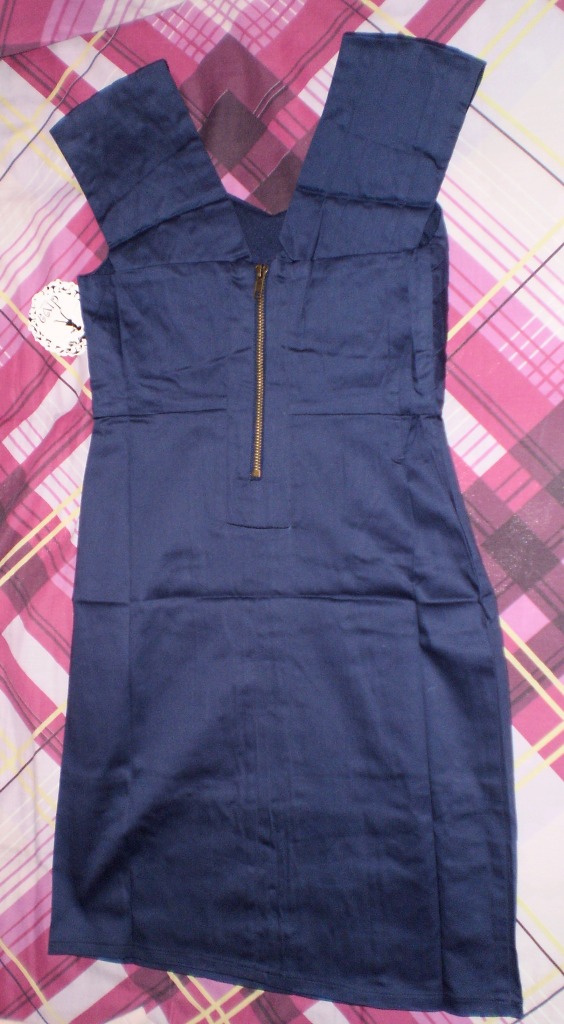

Structured work dress
I love the sleeve details.
$27 after 30% discount
It is really worth the price cos of the worksmanship and the good fabric.
In total, I spent $98.40.
~~~~~~~~~~~~~~~~~~~~~~~~~~~~~~~~~
Jamie's purchases:
"""""""""""""""""""""""
"""""""""""""""""""""""
From Ritz Fashion


Ruffled shirt
$23 after 30% discount
From Clover #02-73A
We managed to get 20% discount off the $29 dresses.
The lady boss is very nice! =)

Eyelet dress
$23

Navy Blue Top See through dress
$23
Jamie spent only $96!
~~~~~~~~~~~~~~~~~~~~~~~~~~~~~~
Li Ming's purchases:
""""""""""""""""""""""""
From Ritz Fashion

White dress
The design on the top is very special.
A bit Egyptian.
$27 after 30% discount

Eyelet Romper
$25 after 30% discount
Belle's purchases:
(she don't want to reveal her name)
"""""""""""""""""""""""""
With her own commentary =)
From Ritz Fashion

Black top with embroidery
Can pair with shorts or pencil skirt
Has lace trimming too, cute!
$23 after 30% discount

Dark blue dress with black tube
The sales assistant forgot to give the belt
but it is ok, can always pair black belt and necklace


OR with a beige belt.
$24 after 30% discount
From Clover


Pink dress
Suitable for work or hot date with boyfren
$23 after 20% discount

Black dress
Absolutely love this

The top part is lace (gaze like material, so won't tear easily)
must wear with strapless bra
Can wear killer heels with it
$23 after 20% discount
Additional information about Ritz fashion:
It supplies blogshops at wholesale rates.
Fresh stocks come in every Monday and Friday.
We got the huge discount as we bought over 6 pieces of clothing.
So you need to go with friends!
Stay tune for part 2 of City Plaza shopping.
Should be around early October.
Subscribe to:
Posts (Atom)